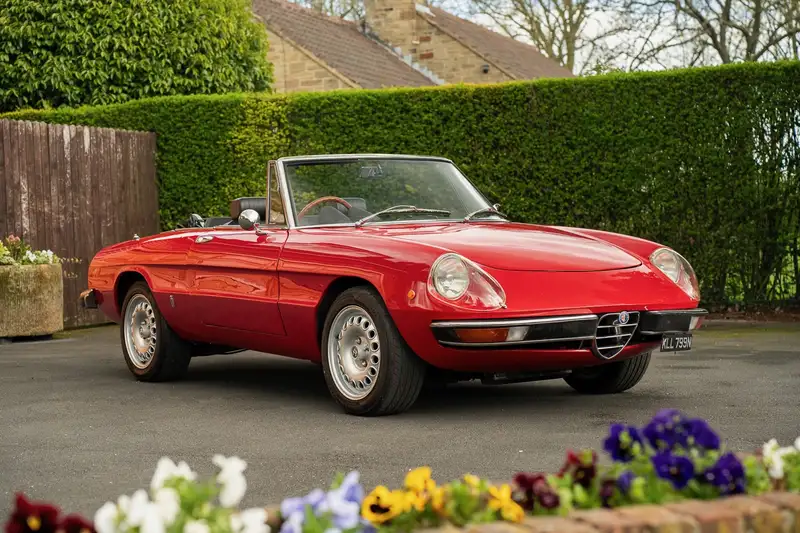
Alfa Romeo Spider Buyer's Guide
Three tracked Spider sales, £10,250 to £19,125, median £17,250, with two more live as we write. The 105-series Spider ran from 1966 to 1993 through four series of the same essential car, and the market prices it in that order: the earlier series lead, with the later cars carrying the volume and the discount.
What to pay
£10,250 buys a usable later-series car, most likely with cosmetic needs and a history file with chapters missing. Around our £17,250 median the market is buying solid, sorted examples where the structural questions have been answered. Our £19,125 ceiling is earlier-series territory: the cars closest to the 1966 original command the premium, and the best of them trade above what the later series can reach. Two live lots is thin supply, so a good car is worth moving on rather than waiting out.
What goes wrong
Rust is the entire inspection: boot floors, sills and wheel arches are the established rot points, and the boot floor in particular goes unnoticed under carpet until the bill arrives. A Spider's value is set underneath, not on top, so underside photographs outrank glamour shots. The twin-cam is a strong, long-lived engine provided the cam and valve maintenance it was designed around actually happens; evidence of regular attention to the top end is worth paying for. Parts and specialist support for the 105-series remain healthy, which keeps good cars on the road and makes bad ones worth saving.
Our view
Buy the earliest series the budget reaches with the soundest boot floor available, and treat cosmetics as the negotiable part. A structurally honest car at our median is the sensible position; the earlier cars at the ceiling are where the long-term money has already gone. Few classics offer this combination of parts supply, specialist depth and open-top usability at these numbers.