Audi Quattro Buyer's Guide
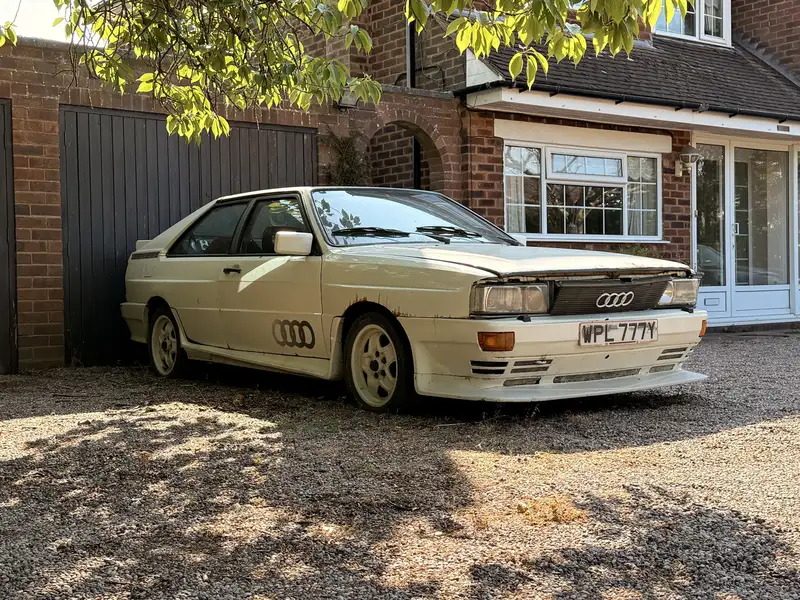
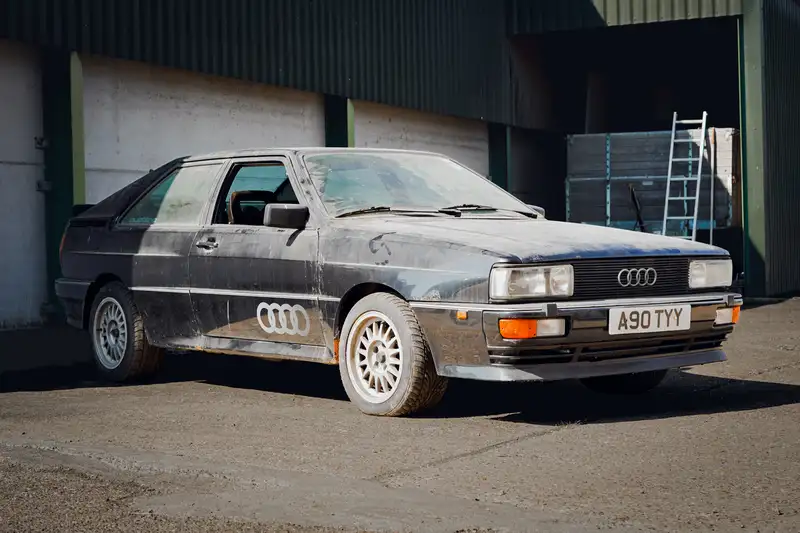
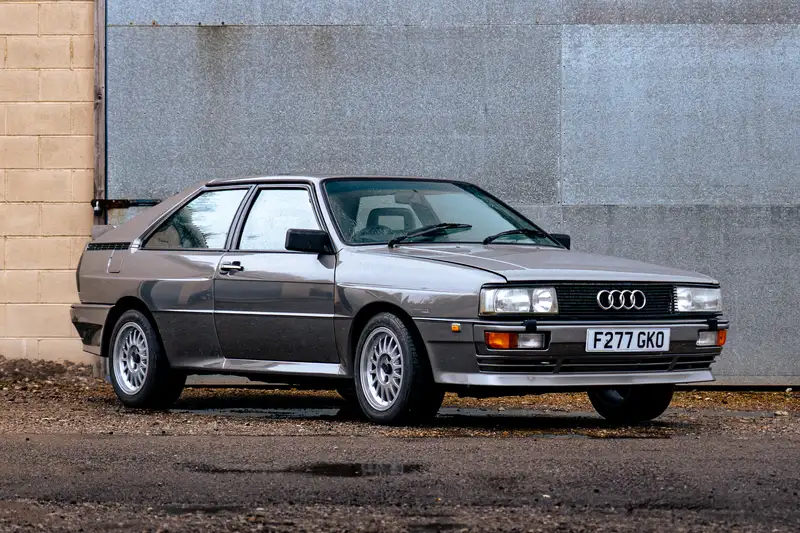
The Ur-Quattro (1980–1991) is the car that put four-wheel drive into rallying and then into everything else: a turbocharged five-cylinder coupé that founded Audi's modern identity. Our three sold results split sharply: a 1989 MB 10v at £27,750, against a 1982 10V at £10,125 and a 1984 WR at £9,563, a spread that says more about condition than about the model.
Know your versions
One generation, three engines. The WR (1980–1987) is the original 2.1-litre 10-valve with 200bhp, carrying the earliest character and the crudest turbo manners. The MB (1987–1989) brought a torquier 2.2, a Torsen centre differential and hydraulic lifters, and is the sweet spot for road use. The RR 20V (1989–1991, 220bhp) is the final and most collected form, with the twin-cam head and the strongest values nationally; we have no 20V result yet. UK cars were right-hand drive from 1982 and the survivor pool is small, which is why provenance and originality dominate pricing.
What to pay
Three results: £9,563, £10,125 and £27,750, median £10,125. Read them as two markets. The two cars around £9,563 to £10,125 (both earlier 10-valve cars, sold August 2026) represent project-to-usable money, the entry point for a car needing recommissioning or carrying stories. The £27,750 for a 1989 MB shows what a later, sorted 10v brings at auction. Qualitatively, excellent restored cars and 20Vs trade above anything in our records; treat our top result as the floor for a genuinely good car, not the ceiling.
What goes wrong
Rust is the Ur-Quattro's chief enemy despite partial galvanising on later shells: check the front inner wings, suspension turrets, sills, boot floor and around the flared arches, where repairs are visible to a careful eye and expensive to do properly. The five-cylinder engines are robust, but the WR's separate fuelling and ignition era means hot-start problems, tired fuel metering heads and vacuum leaks are common; the MB and RR add complexity but run more cleanly. Turbos and exhaust manifolds crack with age, original Bosch electrics and the dashboard's digital display (on later cars) fail in ways that need specialist attention, and interior trim is close to unobtainable, so a complete, original cabin adds real money. Parts supply through Audi Tradition and the club scene is decent for mechanicals, thin for body and trim.
Our view
The Ur-Quattro's historical significance is not in question, and the support network around the five-cylinder cars is strong enough to keep them running indefinitely. Our data points the strategy: cheap cars around £9,563 to £10,125 will absorb the difference to our £27,750 result before they are finished, so unless you want the project, buy the best MB or 20V you can reach and keep it original. The trajectory for good examples is upward; the trajectory for rusty ones is a bodyshop invoice.