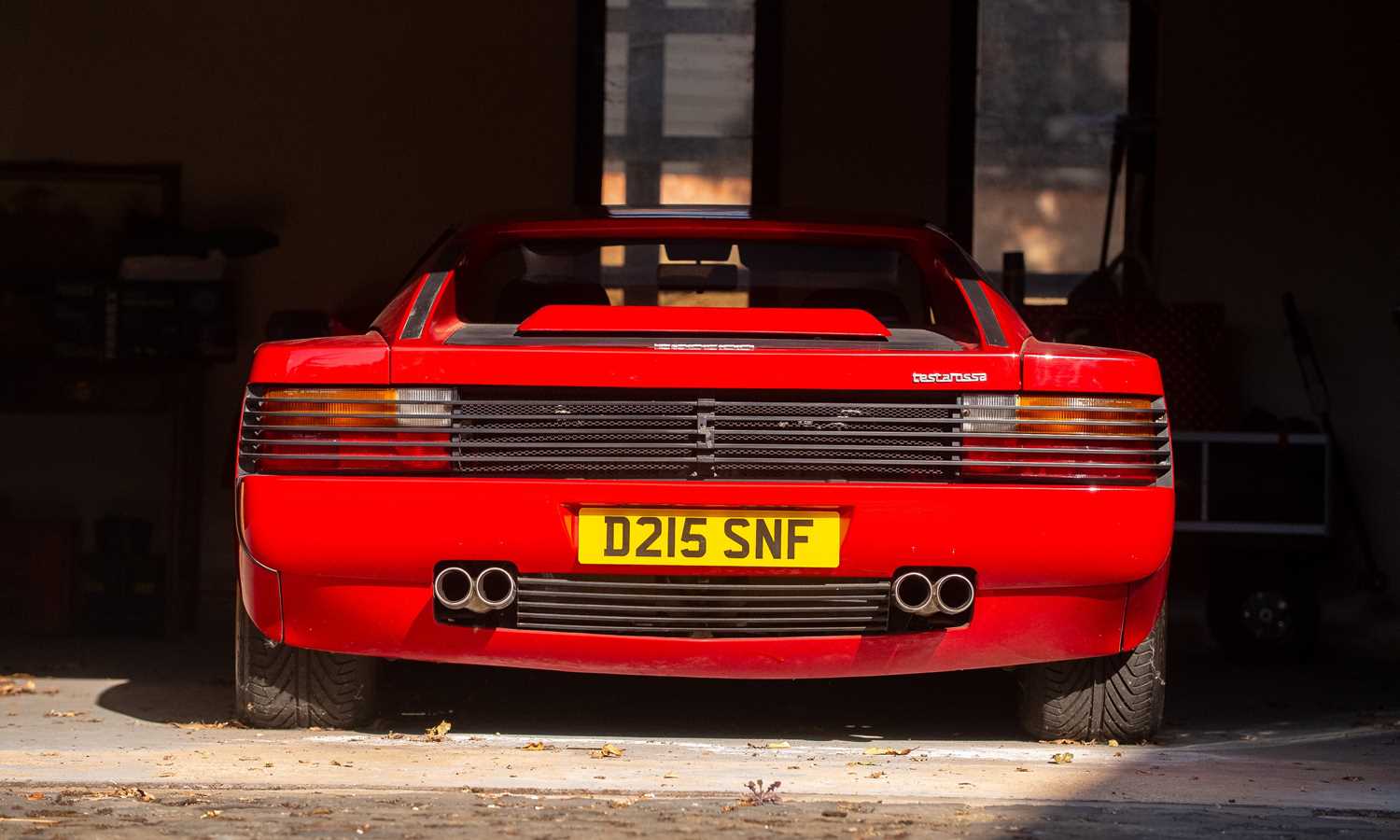
Ferrari Testarossa Buyer's Guide
The Testarossa is the eighties poster car made real, with side strakes, a flat-12 and a width that still turns heads. Our one sale is a 1986 Testarossa at £102,960. Estimates for the family run from £75,000 to £250,000 for Testarossas and 512 TRs, and to £250,000–500,000 for the final F512 M.
Know your versions
The Testarossa (1984–1991) has a 4.9-litre flat-12 producing 390bhp. Early cars have a single high-mounted door mirror (monospecchio), and cars until about 1988 have single-nut wheels (monodado); both details carry a premium. The 512 TR (1991–1994) brought 428bhp, a lower engine position and a revised interior. The F512 M (1994–1996) raised output to 440bhp and replaced the pop-up headlamps with fixed lamps; only around 500 were built.
What to pay
One sale: £102,960 for a 1986 Testarossa. Estimates: Testarossas at £75,000–100,000, £100,000–150,000 and £150,000–250,000 (the higher bands for early monospecchio and monodado cars), 512 TRs at £100,000–150,000 and £150,000–250,000, and F512 Ms with Ferrari Classiche certification at £250,000–500,000. On our evidence, about £100,000 buys a good standard Testarossa, the 512 TR costs a step more, and the F512 M is a collector market.
What goes wrong
The cam belt and clutch services are engine-out jobs, which makes neglect expensive and history essential. Second-gear synchromesh complains when cold on many cars. Check the side radiators and their ducts for corrosion and blockage, and have the chassis inspected on a lift, since the frame outriggers can rust. Electrics are of their era. Interior leather and trim are costly to restore well.
Our view
The Testarossa is better to drive than its image suggests, and at around £100,000 it remains the accessible end of the flat-12 Ferraris. The 512 TR is the better car and worth the premium; the F512 M is for collectors. Whichever you choose, buy on documented engine-out services, because that is where the money goes.