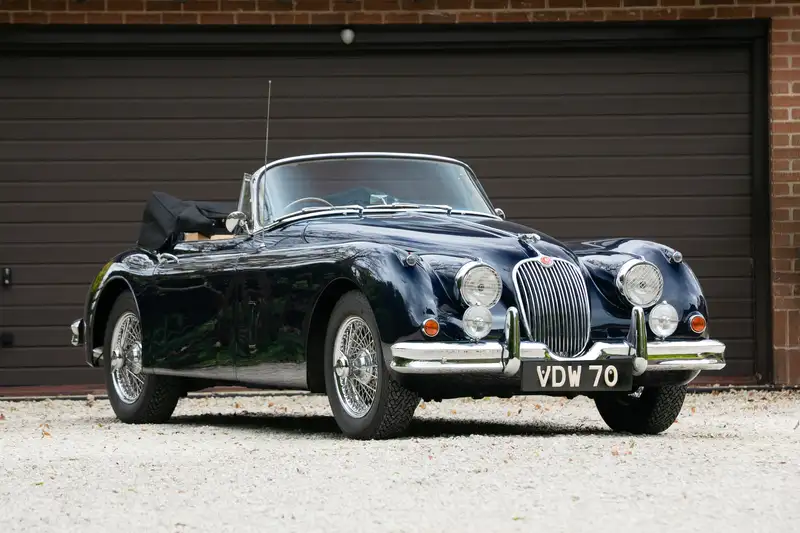
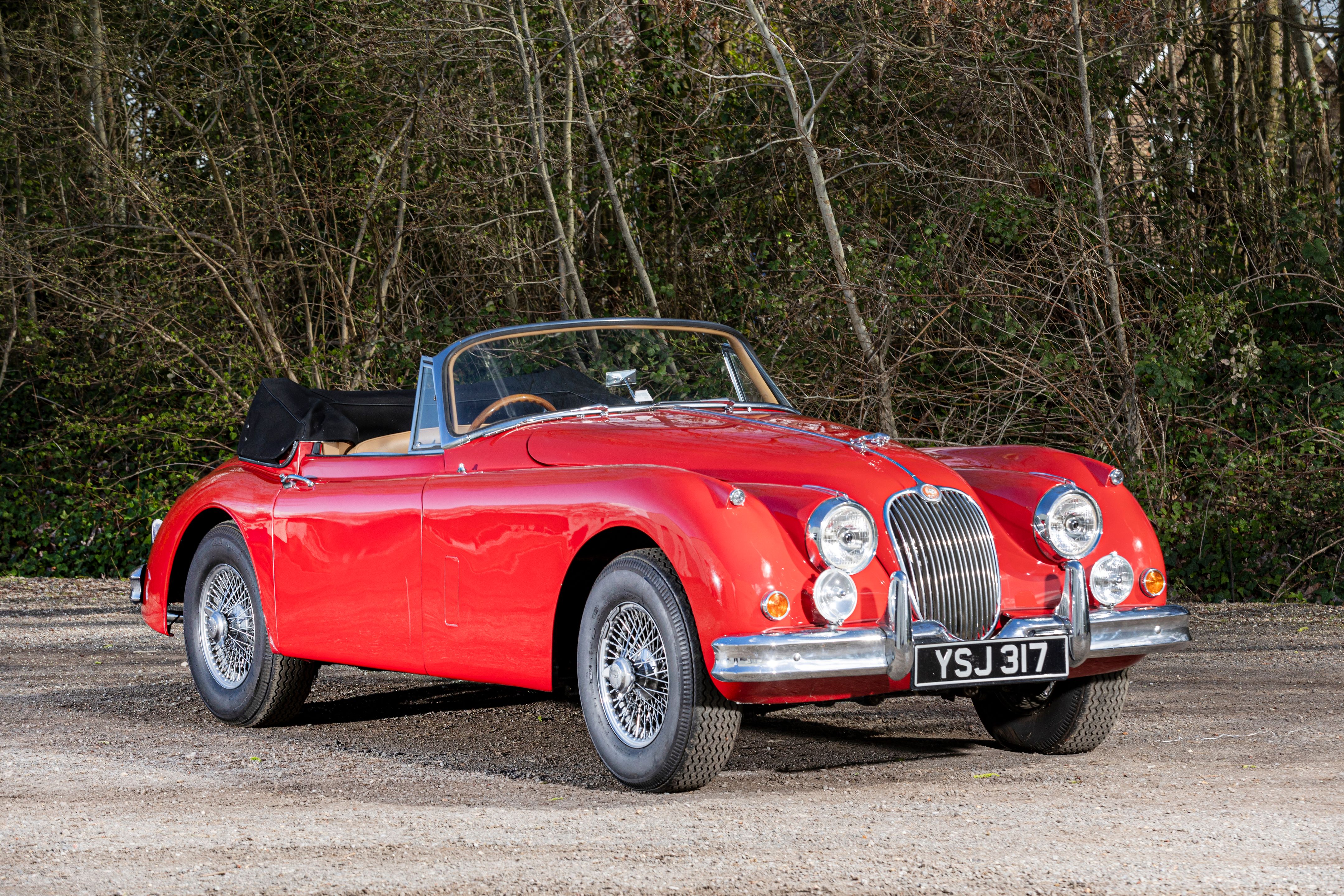
Jaguar XK150 Buyer's Guide
Four tracked XK150 sales, £41,000 to £67,500, median £53,313, with two live as we write. The XK150 closed the fifties XK line that began with the 120, and it is the most civilised of the three: wider, better braked, easier to live with, and long since a pure collector market. Every car here prices off originality: correct body, correct chassis, correct engine, in that order.
What to pay
£41,000 to the high forties buys drivers and older restorations: sound cars with cosmetic age, non-original details or thinner documentation. Around our £53,313 median sits the honest, well-sorted example most buyers should want. From there to the £67,500 ceiling the market pays for the desirable body styles, matching numbers and restoration quality; nationally the finest cars trade above anything in our records, so our ceiling buys very good rather than concours.
What goes wrong
Structure and originality rule everything. The separate chassis and the body rot in the usual fifties places: chassis rails, outriggers, sills, floors and inner wings, and a poor past restoration hides more than it fixes, so underside evidence and photographic restoration history are worth more than fresh paint. Verify numbers against a Heritage certificate before bidding. Mechanically the XK six is one of the great durable engines, fully supported by specialists and clubs, with complete parts supply; nothing under the bonnet should decide the purchase.
Our view
Buy the most original, best-documented structure the budget reaches; cosmetics are the recoverable cost, chassis repair and lost provenance are not. A matching-numbers car at our median is real blue-chip ownership at the accessible end of it, and the XK parts and specialist scene means these cars can be used, not just kept. The XK150 rewards the buyer who reads the file before admiring the curves.