Jensen Interceptor Buyer's Guide
The Interceptor (1966–1976, revived 1983–1992) is Britain's great Italian-suited muscle car: Touring-styled, Vignale-bodied at first, and powered by Chrysler V8s of up to 7.2 litres. Our data shows a market with a wide quality gap: one sold result at £45,760 for a 1974 Series III, against active Mk II and Mk III cars estimated at £20,000 to £30,000. The difference between those numbers is invariably rust and restoration history.
Know your generations
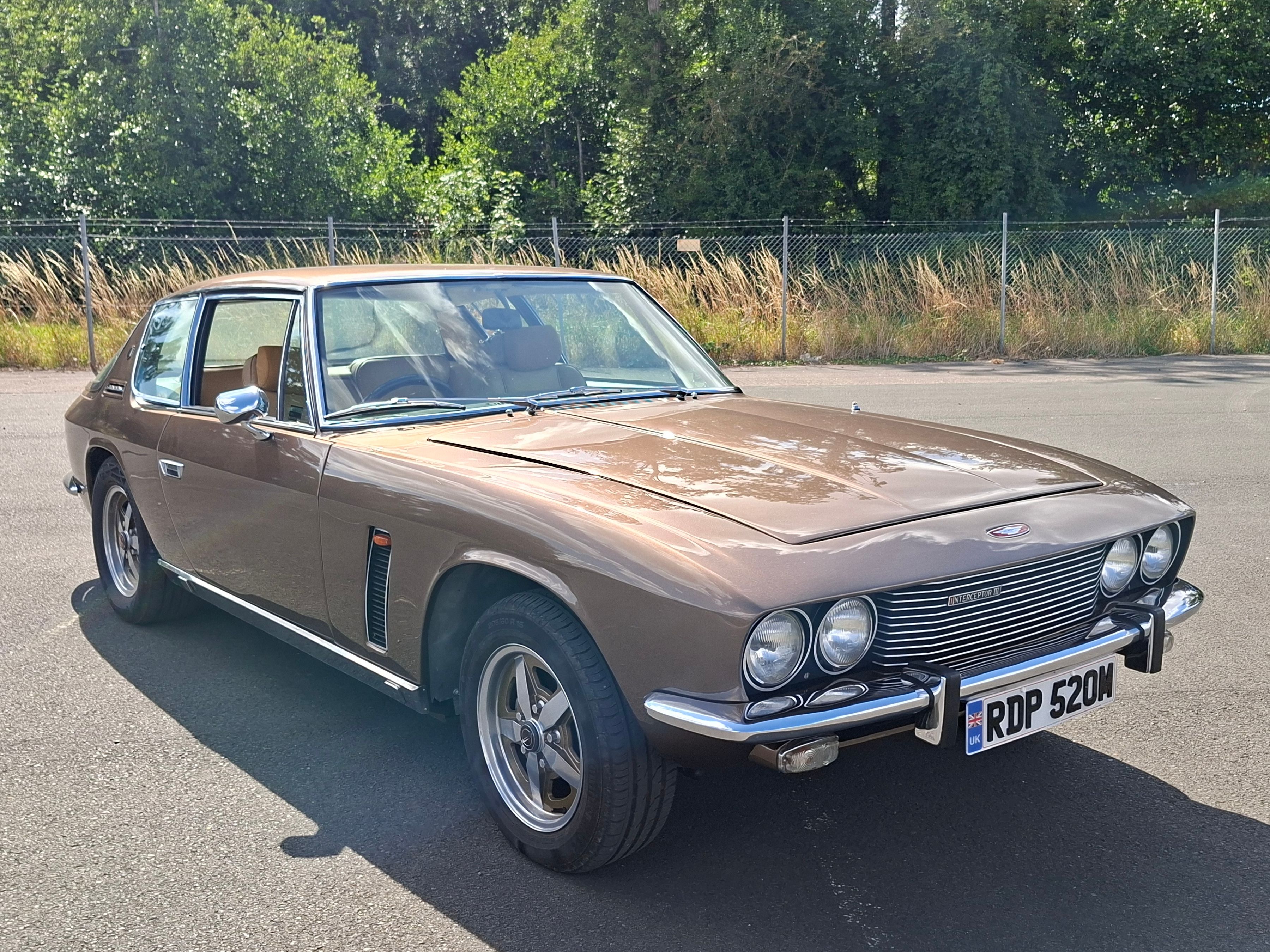
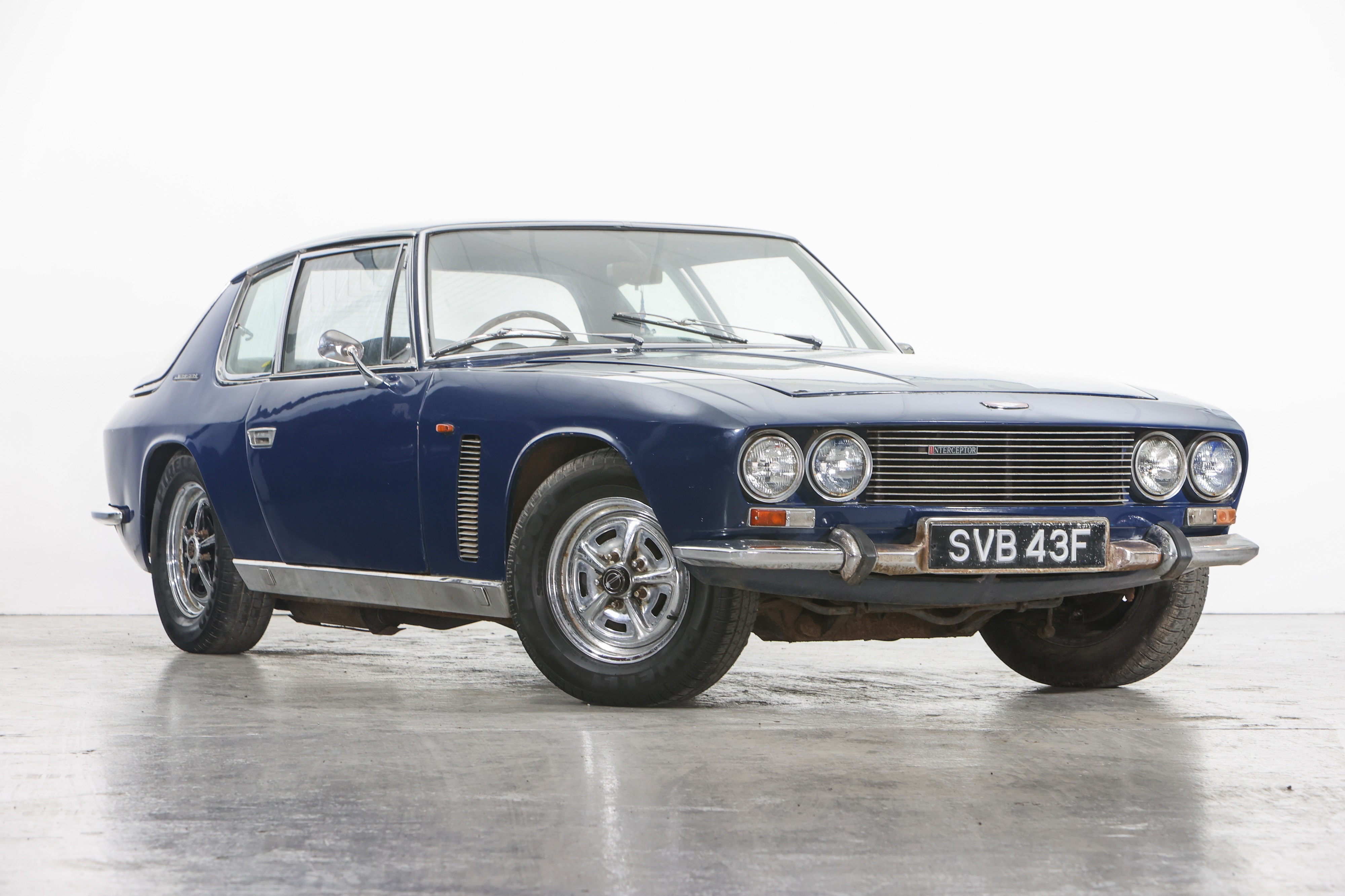
The Mk I (1966–1967) established the shape, with the 6.3-litre (383) V8 and that vast glass tailgate. The Mk II (1968–1971) brought a revised nose and interior; a convertible joined late in the run. The Mk III (1971–1976) is the volume car, with GKN alloys, the 7.2-litre (440) V8 rated at 385bhp, and the 390bhp six-pack SP as the performance flagship; the four-wheel-drive FF is a separate and far rarer model outside this page. After the 1976 collapse, the S4 (1983–1992) was hand-built in tiny numbers with the 5.9-litre engine, more a coachbuilt revival than a production car, and our catalogue lists both saloon and convertible forms. Mk III saloons dominate survivors and our listings.
What to pay
One sold result: £45,760 in April 2026 for a 1974 Interceptor Series III, which is strong money representing a properly sorted car. The three active listings are estimated lower: a 1971 Interceptor at £20,000 to £25,000, a 1971 Mk II at £25,000 to £30,000, and a 1974 Mk III at £24,000 to £28,000. On this evidence, £20,000 to £30,000 is where honest usable Interceptors are pitched, and £45,760 is what the market pays when the rust and interior have already been dealt with. Convertibles and the SP trade above ordinary saloons, qualitatively. One sale is one sale; the estimates carry the pattern.
What goes wrong
Rust is the Interceptor's ruin and the entire basis of its pricing. The steel body and platform rot at the sills, front and rear wheelarches, door bottoms, bulkhead, floors, boot floor and around that huge rear screen, and proper repair is coachbuilding, not panel-bolting; a cheap car can hide restoration costs exceeding its own price, which is exactly what the gap in our figures implies. The Chrysler 383 and 440 V8s and the Torqueflite are almost agricultural in their durability and cheap to rebuild, but the cooling system was marginal from new: expect and prefer an uprated radiator and electric fans, and treat overheating as disqualifying until fixed. Powerlok differentials whine, kingpin-era front suspension on early cars wants greasing, brakes need a full overhaul on any long-stored car, and the mostly Lucas electrics reward patience. Interiors, glass and brightwork are the expensive Jensen-specific items; the tailgate seal alone leaks on half the survivors. Fuel consumption in the low teens is not a fault, but budget for it.
Our view
The Interceptor is a car to buy at the top of the market, not the bottom: our £45,760 result for a sorted Series III is better value than a £20,000 to £25,000 estimate car needing structural work, because the drivetrain never kills these cars and the body always does. Club and specialist support is strong, Chrysler mechanicals guarantee it can be kept running indefinitely, and a rust-free Mk III is a genuinely usable classic GT. Buy the shell, not the engine.