Lamborghini Diablo Buyer's Guide
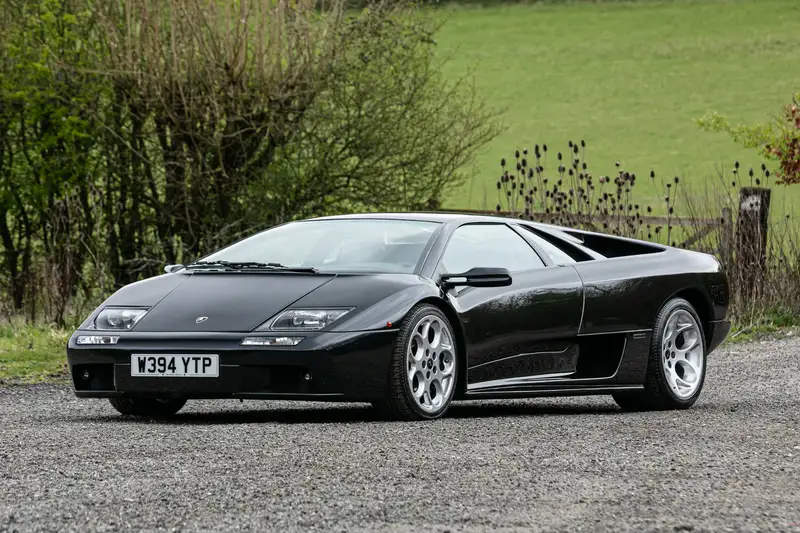
The Diablo (1990–2001) is the last V12 Lamborghini developed before Audi ownership finished the job, and the market now splits it sharply by variant and condition. Our data illustrates the extremes: a 2000 VT 6.0 sold at £376,875, while a 1992 car sits in our active listings estimated at just £15,000 to £20,000, an estimate that only makes sense for a project, a damaged car or a rolling shell. Few models in our records span twenty-to-one between their data points.
Know your versions
One generation, steady escalation. The original Diablo (1990–1993) has the 485bhp 5.7 V12, pop-up lamps and no driver aids; the purist's car. The VT (1993–1998) added viscous four-wheel drive and power steering, with the VT Roadster from 1995. The SV (1995–1999) is the rear-drive 510bhp extrovert and the enthusiast favourite of the mid-run cars. The 1999 facelift brought fixed lamps and ABS; the Diablo GT (1999–2000, 575bhp, around 80 cars) is the rarity at the top, and the VT 6.0 (2000–2001, 550bhp) is the Audi-era swansong, the most developed and usable Diablo of all, which is exactly what our sold result was. Earlier cars are rawer; later cars are better built, and the market has been rewarding the 6.0 accordingly.
What to pay
One sold result: £376,875 in May 2026 for a 2000 Diablo VT 6.0. The only other pack figure is the 1992 car's £15,000 to £20,000 estimate, which we read as salvage or project territory rather than a market price for a running Diablo. With a single sale we will not draw tiers; what the result establishes is that the VT 6.0 sits in the high three-hundreds when right, and that anything offered at a fraction of that needs its history examined line by line before bidding.
What goes wrong
The V12 itself is strong, but everything around it is expensive. Clutches are engine-out territory on early cars and wear fast in traffic; a documented recent clutch is worth real money. Cooling systems, radiators and electric fans must be faultless. Early electrics (switchgear, window motors, instrument packs) fail routinely, and the OZ-era wheels and carbon-composite panels on various cars are near-impossible to source undamaged. Check the steel spaceframe for corrosion and, critically, for accident repair: many Diablos met barriers in their first decades, and crash history buried under new composite panels is the biggest single value risk. VT four-wheel-drive systems need their viscous units checked, pop-up headlamp mechanisms on pre-facelift cars stick, and 6.0 cars, though far better screwed together, still demand specialist servicing at four figures annually as a floor. Cars that have sat unused need everything rubber, hydraulic and fuel-related assumed perished.
Our view
The Diablo VT 6.0 our £376,875 result represents is the one to own: the developed car, the last pre-modern V12 Lamborghini, and the version a specialist can keep genuinely usable. Early cars are theatre with running costs to match, and anything priced like our £15,000 to £20,000 active estimate is a parts donor or a decade-long commitment dressed as an opportunity. Buy history, buy the 6.0 if the budget reaches it, and never buy a Diablo without a specialist inspection of frame and crash history.