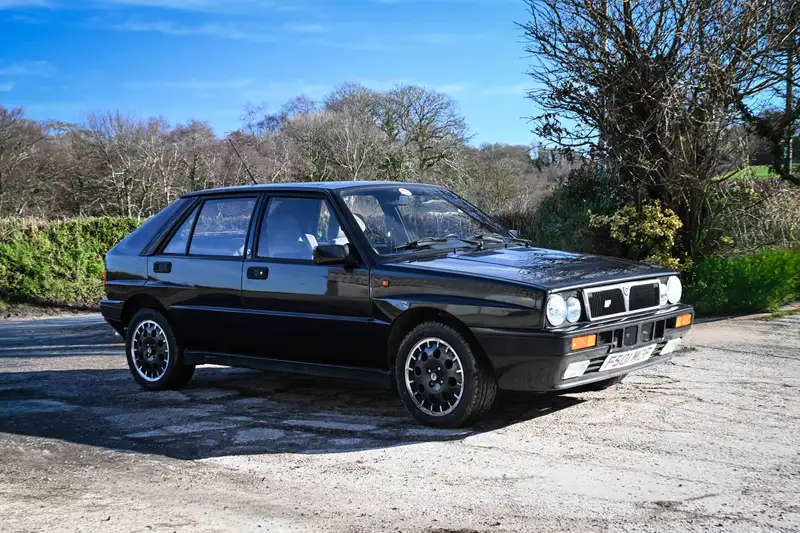
Lancia Delta Buyer's Guide
Three tracked Delta sales, £2,998 to £28,175, median £13,500, with three more live as we write. The Integrale versions lead the range, as befits the car that turned rally homologation into a road-car legend, while the ordinary Deltas that made up the production volume sit at the low end, trading as curiosities rather than collectibles.
What to pay
£2,998 buys the ordinary end of the range: the everyday Deltas, honest cars for buyers who like their Lancias unfashionable. Around our £13,500 median the market moves into the hot versions in driven, used condition, where the history file carries the value. From there to our £28,175 ceiling the money is buying the Integrale versions in their better forms: documented, unabused and structurally honest examples of the homologation cars. Three live lots keeps the market ticking without ever feeling generous.
What goes wrong
Rust, everywhere it matters: sills, arches, floors and the structure behind them, because the Delta left the factory with 1980s Italian corrosion protection and four decades have not improved it. The underside inspection is the purchase decision; a shiny Delta with a soft structure is a parts car with good photographs. Mechanically the twin-cam turbo drivetrains are well understood, and parts supply runs through the specialist network rather than the high street: most things are obtainable, few things are cheap, and a relationship with a marque specialist is effectively part of the ownership proposition.
Our view
The Integrale is the reason this market exists, and a documented, rust-honest example toward our ceiling is the buy: the specialist infrastructure exists to keep these cars running indefinitely, which is more than can be said for most homologation heroes. The ordinary Deltas at the low end are for the committed only. Buy on structure, budget for the specialist, and keep every receipt.