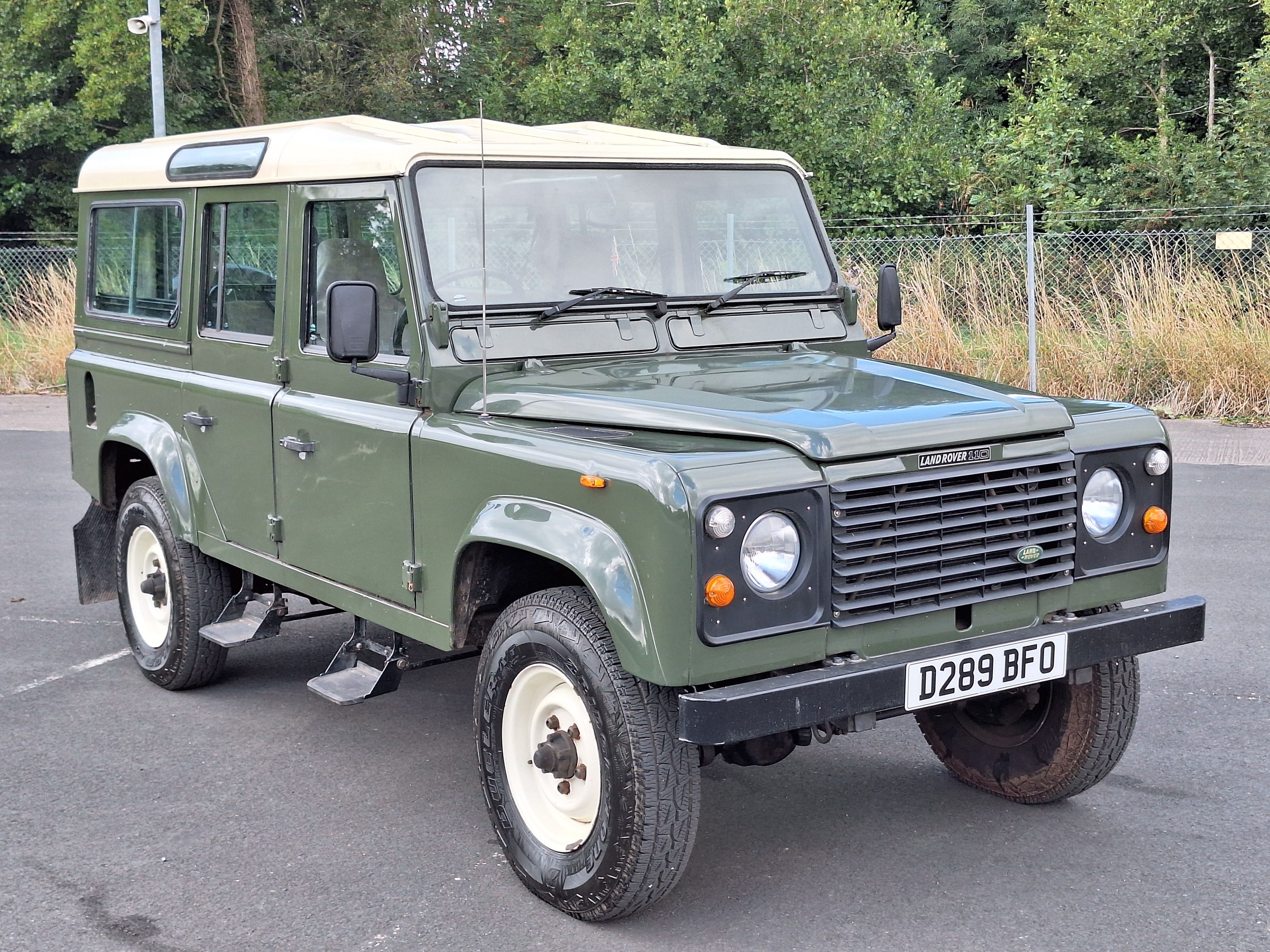
Land Rover 110 Buyer's Guide
The 110 (1983–2016, badged Defender 110 from 1990) is the long-wheelbase working Land Rover, and its market is now two markets: farm-grade survivors and cherished or rebuilt examples. Our data shows both: a 1988 V8 County Station Wagon sold at £3,700, while active TDi-era cars are estimated at £13,000 to £16,000. The gap is chassis steel, not mileage.
Know your versions
One continuous evolution, best navigated by engine. The coil-sprung 110 launched in 1983 with 2.5 petrol and diesel fours and the 3.5 V8, in County trim for the passenger-carrying station wagons; our sold car is exactly that breed. The 200TDi (1990–1994) and 300TDi (1994–1998) turbodiesels are the classic-era sweet spot: simple, mechanical, endlessly rebuildable, and the reason ex-military 300TDi cars like the one in our listings are sought after. The Td5 (1999–2006) added electronic engine management and more refinement; the TDCi "Puma" era (2007–2016) brought Ford's 2.4 then 2.2 diesel, a six-speed box and a modern dash, ending with the heavily collected 2015–2016 run-out editions. Station Wagon, County and XS trims carry premiums over commercial variants, qualitatively.
What to pay
One sold result: £3,700 in April 2026 for the 1988 110 V8 County Station Wagon, which at that money will have been a project or working-grade vehicle. The active estimates show where sound cars are pitched: a 1993 300TDi ex-military at £14,000 to £16,000 and a 1987 example at £13,000 to £16,000. Read the market from those three figures: rough-but-running early cars in the low thousands, honest usable TDi-era 110s in the mid-teens. Late Puma station wagons and galvanised-chassis rebuilds trade well above this data, qualitatively. One sale plus two estimates is thin; every 110 is priced on its own steel.
What goes wrong
The chassis rusts, and that is the purchase decision. Rear crossmember, rear chassis legs, outriggers and the sections above the rear springs go first; probe with a screwdriver, not a glance, because underseal and plated-over rot are endemic in the trade. The bulkhead rots at the footwells, door pillars and vent apertures, and a proper bulkhead repair is a cab-off-scale job. Aluminium body panels corrode where they meet steel (door frames, seat box) through galvanic action rather than rusting through. Mechanically: 200/300TDi engines are near-immortal with timing belt and oil changes; Td5s suffer oil migrating up the injector loom (a known, cheap fix) and cracked cylinder heads on neglected cars; Puma TDCi cars eat dual-mass flywheels and clutches and their EGR systems clog. LT77 and R380 gearboxes wear synchros, transfer boxes leak as a hobby, and swivel pins, wheel bearings and suspension bushes are routine consumables. None of it is expensive by classic standards; all of it is constant.
Our view
A 300TDi 110 Station Wagon on a solid or galvanised chassis is one of the most durable classics money can buy: every part is available, every job is doable at home, and the values have only ever gone one way since Defender production ended. The £13,000 to £16,000 our active estimates show for honest TDi cars is the rational entry; our £3,700 sold V8 is what needs-everything money looks like, and the rebuild will cost multiples of the saving. Buy the chassis and bulkhead; the rest is Meccano.