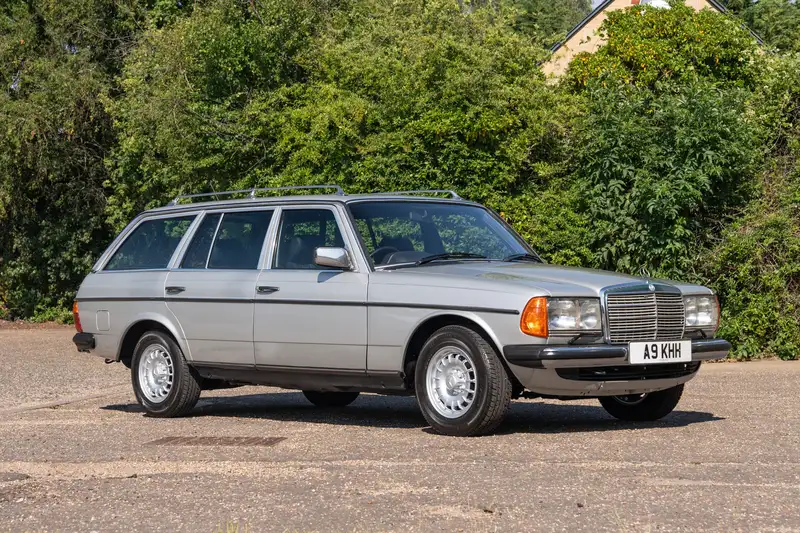
Mercedes-Benz W123 Estate Buyer's Guide
The S123 estate (1977–1986) is the load-carrying version of the most over-engineered mid-size Mercedes ever made, and the first factory-built Mercedes estate. Our two sold results are both 280 TEs and they bracket the market emphatically: £5,500 for a 1985 automatic in April 2026, £24,188 for a 1986 car in August 2026. Same model, same engine, a gap of more than four to one; condition and originality are the entire difference.
Know your versions
One generation. The range ran from the four-cylinder 200 T and 230 TE (the 230 TE, 1980–1986, being the sensible petrol) through the diesels beloved of the million-mile brigade, to the 280 TE (1977–1986) with the M110 twin-cam straight six, the flagship and the variant both our results represent. All estates got standard self-levelling rear suspension to cope with loads, a detail that matters at buying time. Seven seats via the rear-facing bench were a period option and add appeal today.
What to pay
Two results: £5,500 buys a driver-grade 280 TE, £24,188 buys an exceptional one. With only two data points we will not invent a curve between them, but the spread itself is the lesson: the W123 estate market now behaves like a proper classic market, where the best examples earn multiples of the merely good. Restoration costs comfortably exceed the difference, so the expensive car is usually the cheaper one.
What goes wrong
Rust decides value: rear wheel arches, sills, jacking points, front wings, the battery tray, and on estates particularly the tailgate, its hinges and the load-floor seams where water gets trapped. The self-levelling rear suspension is the estate-specific item: its nitrogen spheres and pump wear out, the car sits low or rides hard, and overhaul is a known but not trivial cost; many cars have had it bodged rather than fixed. The M110 six in the 280 TE is robust but hardworking, with valve-stem seals (smoke on the overrun) and tappet noise the common complaints, and it demands more fuel and fettling than the unstressed 230 TE. Vacuum systems (central locking, engine shut-off on diesels) leak with age. Interior parts are durable but MB-Tex and dash-top cracks are the giveaway of a sun-baked life.
Our view
The W123 estate is one of the most rational classics in existence: genuinely usable as everyday transport, supported by the Mercedes classic parts network, and now rare in good condition because most were worked to death, which is exactly what our £5,500 to £24,188 spread reflects. Buy the most rust-free car you can afford, check the self-levelling works with weight in the boot, and prefer the 230 TE for economy of ownership or the 280 TE, as both our results were, for the six-cylinder version the market clearly wants.