McLaren Super Series Buyer's Guide
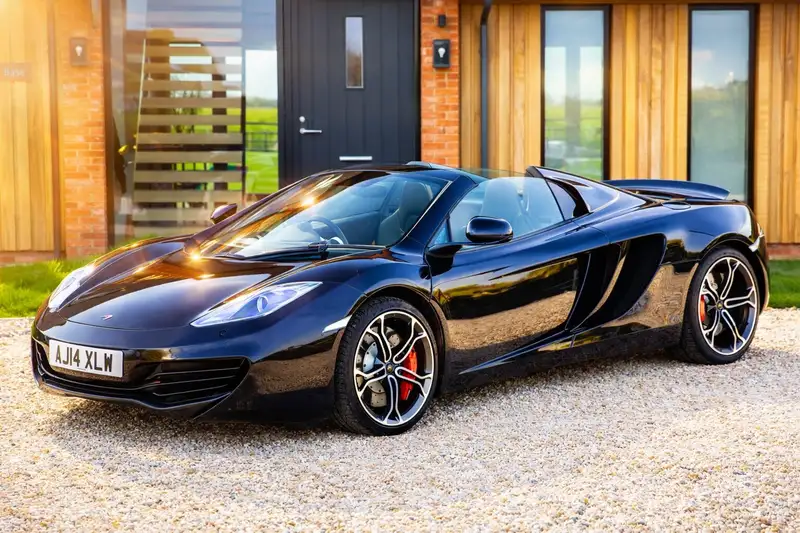
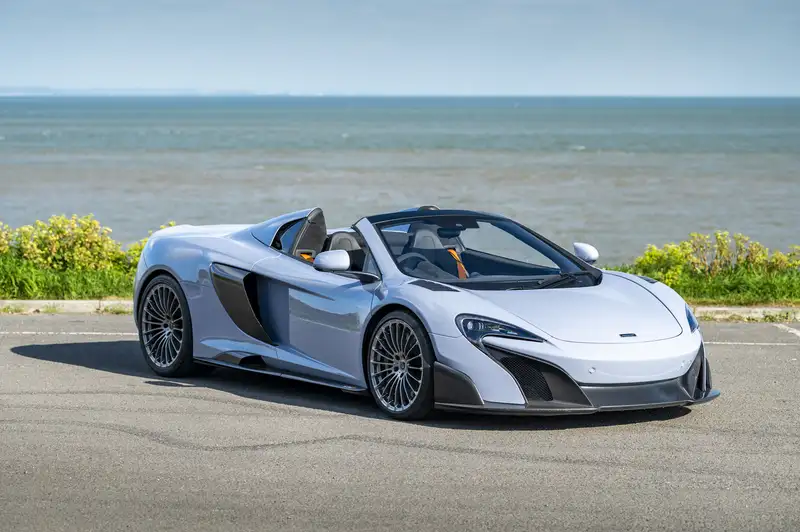
The Super Series is the core of the modern McLaren range: the MP4-12C that restarted the road-car business in 2011, through the 650S and 675LT, to the 720S, 765LT and today's 750S. Our two sold results sit at the collector end of the spectrum: £114,750 for a 2014 MP4-12C Spider with 2,730 miles, and £310,500 for a 2016 675LT Spider with 1,950 miles, both sold in May 2026. Neither is a typical-mileage car, and both prices should be read with that in mind.
Know your generations
Gen 1 (P11, 2011–2017) begins with the MP4-12C and 12C Spider: carbon MonoCell tub, 3.8-litre twin-turbo M838T V8 and the interlinked hydraulic ProActive Chassis Control suspension in place of conventional anti-roll bars. Early cars left the factory with 592hp; McLaren's 2012 update raised output to 616hp and was applied to existing cars, so confirm any 12C has had its software campaigns done. The 650S (2014–2017, 641hp) reworked the nose and much of the calibration, and the 675LT (2015–2017, 666hp) is the Gen 1 pinnacle: 500 coupés and 500 Spiders, lighter and sharper, and priced accordingly, as our £310,500 result shows.
Gen 2 (P14, 2017 on) is the 720S: new Monocage II structure, 4.0-litre M840T with 710hp, and a step change in speed. The 765LT (765 coupés from 2020, then Spiders) repeats the Longtail formula, and the 750S (2023 on, 740hp) is the current evolution. None of the Gen 2 cars appear in our sold data yet.
What to pay
Two results only, so we quote them rather than build tiers: £114,750 bought a 2,730-mile 2014 12C Spider, and £310,500 bought a 1,950-mile 2016 675LT Spider. Both are preservation-grade cars sold by the same auction house on the same date, and both will sit above what ordinary-mileage equivalents fetch; the 675LT's limited build explains its position at nearly three times the 12C's money. Until higher-mileage sales enter our records we would treat these as the top of each model's range, not the middle.
What goes wrong
The engine and seven-speed gearbox are proven and rarely the story. The hydraulic suspension is: accumulators and lines can leak, a corner or pump failure is a four-figure repair, and a car sitting unevenly overnight is telling you something. Have the system pressure-tested at inspection. The IRIS infotainment on 12C-era cars is notoriously glitchy; McLaren issued updates and replacement units over the years, and a working, updated system is worth confirming rather than assuming. Batteries drain fast when parked, so a conditioner is part of ownership, and cars that have sat accumulate electrical faults. Check door and roof mechanisms (dihedral doors and, on Spiders, the folding hardtop) through full cycles, look for front-end stone-chip respray evidence and splitter scrapes, and insist on a complete service record from McLaren or a recognised specialist, since the market discounts gaps heavily. Any accident history involving the tub needs specialist assessment before money moves.
Our view
The 12C is the historically significant one, the car that built modern McLaren, and it remains the accessible end of the Super Series; our £114,750 result is delivery-mileage money, and the model's reputation for temperamental early electronics is largely a maintenance problem, not a design flaw, on a properly kept car. The 675LT is already a blue chip and our £310,500 result confirms it. For a car to keep and use, a well-documented 12C or 650S with suspension health proven is the value play of the modern supercar era; for a car to hold, the Longtails have made their own argument.