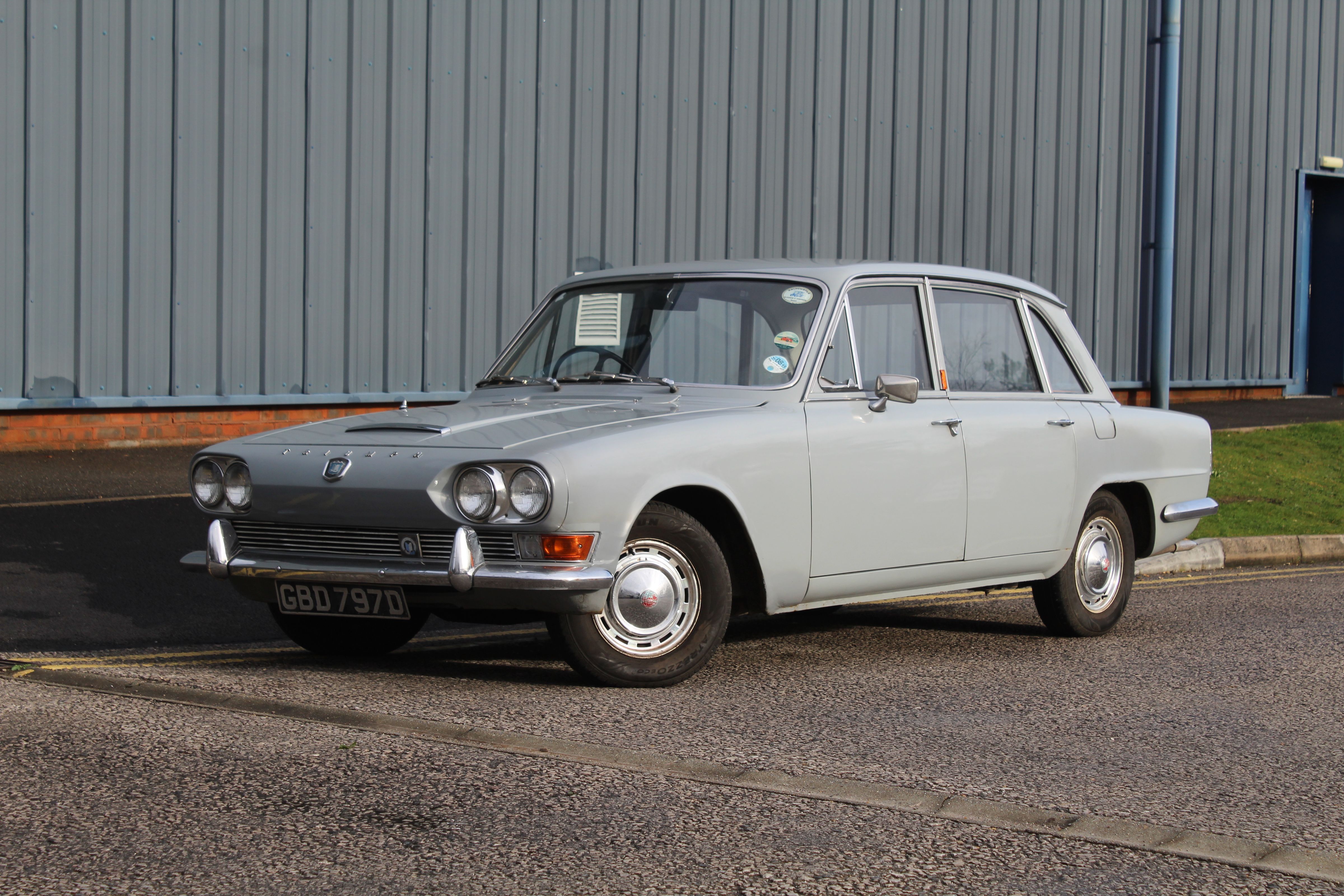
Triumph 2000 Buyer's Guide
The 2000 was Triumph's answer to the Rover P6: a Michelotti-styled executive saloon with a smooth two-litre straight six, launched the same week as its Solihull rival in 1963. Our data holds a single sale, a 1966 Mk1 at £3,800, which is representative of what these cars are: genuinely usable six-cylinder classics at the price of a decent motorcycle.
Know your versions
One body family across fourteen years (1963–1977), split at the 1969 facelift. The original Mk1 has the cleaner, more delicate Michelotti nose; the Mk2 of 1969 onwards gained the longer Stag-style front and tail and a slightly better cabin. Saloon and estate were both offered, the estate now much the rarer sight. The catalogue also lists the injected PI variant, which brought Lucas mechanical fuel injection and a useful power jump over the 90bhp carburettor car; in period it was the quick one, today it is the one that needs an owner who understands the injection system. The closely related 2.5-litre cars share the body and most of the oily bits, so parts interchange is broad.
What to pay
One sold result: a 1966 Triumph 2000 Mk1 at £3,800 in April 2026. That is the entire dataset, so treat it as a single data point rather than a market. It sits where you would expect a presentable, running Mk1 saloon to sit: these are not collector cars yet, and the sale suggests solid examples remain accessible. Estates and genuine PI cars trade on rarity and tend to be the ones fought over; our data cannot yet put a number on that premium.
What goes wrong
Rust is the deciding factor. Check the sills (structural, and often filled rather than repaired), the front valance and wings, the rear spring hangers and the boot floor; a car that is rotten in the sills is a body-off proposition that no £3,800 purchase price will justify. The six itself is a long-lived, unstressed unit; listen for a rattly thrust washer issue at the crank (rev the engine and watch the pulley for end float, the same check as on a Stag). On PI cars the Lucas injection suffers from vapour lock and tired pumps; a properly sorted system works well, a neglected one will strand you, and many cars have been converted to carburettors over the years, which affects value to purists. Overdrive gearboxes should engage promptly; the units are rebuildable and the clubs know them well. Trim is the hard part: good Mk1 brightwork and interior wood are scarcer than mechanical parts.
Our view
A sound 2000 saloon around our £3,800 result is one of the more intelligent cheap classics: six cylinders, seats five, cruises at motorway speed, and the Triumph club scene supports it properly. Buy on bodyshell condition and nothing else. The estate is the version to hold if you find a good one, and a working PI rewards the brave; but a rot-free carburettor saloon is the sensible money and will keep running as a classic for decades.