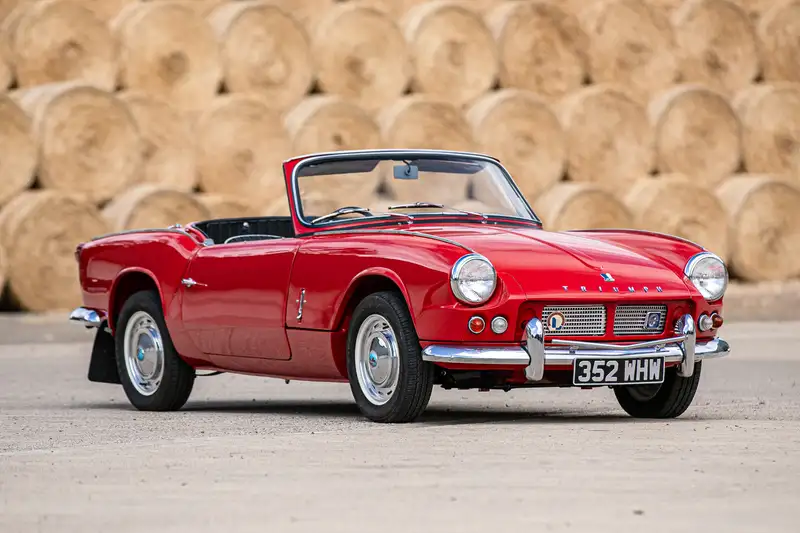
Triumph Spitfire Buyer's Guide
Five tracked Spitfire sales, £2,020 to £12,800, median £6,900, with one more live as we write. The Spitfire is the British sports car with a separate chassis, which changes the buying process: the structure can be inspected from underneath rather than guessed at through filler. Our sixfold spread from floor to ceiling has one explanation, and it is condition; nothing else in the Spitfire market moves prices this far.
What to pay
£2,020 to £4,000 buys projects and rough runners, where the chassis outriggers set the real bill. Around our £6,900 median sits the honest, usable Spitfire: solid chassis, sound sills, presentable body. From there to our £12,800 ceiling the market pays for restored cars and strong originality. With only one live lot in our records at present, the patient buyer shops nationally and lets our figures set the negotiating range.
What goes wrong
The chassis rots at the outriggers and the body rots at the sills, and both matter: the sills contribute stiffness on top of the separate frame, so neither can be waved away. Floors, rear wheelarches and the bonnet's hinge boxes follow. The upside is that everything is visible with the car on ramps, and the tilting bonnet-forward front end gives engine access a home mechanic will not find on anything modern; the small Triumph four is simple, cheap and fully supported by a strong parts and club network. Swing-axle rear ends on earlier cars want understanding rather than fear.
Our view
The Spitfire is the right first classic: inspectable structure, total engine access, cheap parts and a spread of prices that lets condition, not badge, choose the car. Buy at or above our median unless the welding is a hobby rather than a horror, because the gap between our floor and median is exactly the cost of closing it. The good ones are usable, fixable and quietly getting scarcer.